Meet the Builder: Shelterwood Construction
Insights on High-Performance Home Construction with Shelterwood Construction
Building a custom, high-performance home can be a rewarding journey, but navigating the process requires clear communication, the right team, and realistic expectations. In a recent installment of BrightBuilt Home’s "Meet the Builder" webinar series, Parlin Meyer (BBH Managing Principal) sat down with Colin Lindberg, owner of Central Vermont’s Shelterwood Construction, to discuss the realities, timelines, and decision-making behind custom and modular home construction.
Click here to watch the full recorded webinar with Colin on our YouTube channel!
The Vision Behind Shelterwood Construction
Led by owner Colin Lindberg, Shelterwood has been operating in the mountains of Central Vermont for over a decade. With 20 years of experience in the construction industry, Lindberg started Shelterwood to move away from industry shortcut culture and focus on best practices: building extremely air-tight, highly energy-efficient homes using local, sustainable materials wherever possible.
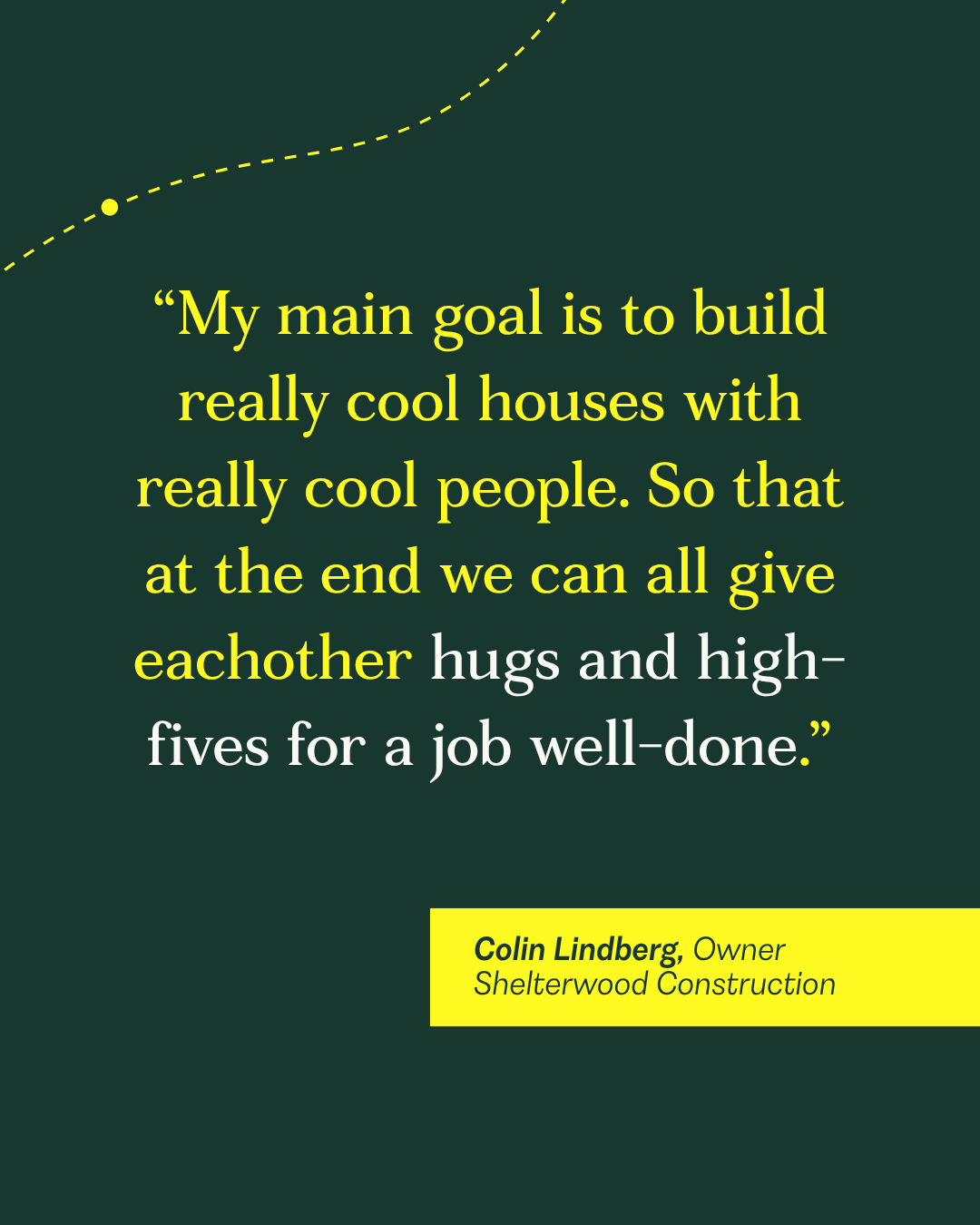
For Lindberg, success isn't just measured by structural integrity—it's about the team dynamic.
1. The Power of Early Builder Involvement
Consider bringing a general contractor onto the project as early as possible during the design phase.
Accurate Estimating: When a builder is involved from the start, they provide real-time cost analysis and estimations as design decisions are made.
Feedback Loops: Having local boots-on-the-ground input helps manage expectations around local labor, regional material costs, and site-specific conditions.
2. Modular vs. Stick-Built: How to Decide?
While off-site modular construction offers increased speed, weather protection, and fixed-cost predictability, site conditions ultimately dictate the path forward.
Site Accessibility: Tight mountain roads, steep slopes, or lack of crane access may require a traditional stick-built approach on-site.
Price Predictability: Modular construction forces design and finish decisions early in the process, offering strong price predictability and reducing scope creep compared to the sequential nature of stick building.
3. Realistic Timelines & Headwinds
Homeowners often underestimate the time required to bring a custom project to life.
Pre-Construction Phase: Design, estimating, permitting, and town approvals typically take 6 to 8 months.
Construction Phase: From groundbreaking to move-in, a custom home generally takes around 12 months (though off-site modular builds can shorten the on-site construction window).
Weather & Seasonality: In regions like Vermont, winter conditions and mud season dictate when groundbreaking can safely occur without inflating costs.
Cost Escalation Clauses: Due to global supply chain and material cost volatility, fixed-price contracts frequently include shared-cost escalation clauses to keep contracts fair for both builder and client.
Advice for Prospective Homeowners
If you're planning your own custom build, Lindberg offers two critical pieces of advice:
Beware of Immediate Availability: "If you call a builder and they are available to start right away, run away." Quality builders and designers are consistently in demand.
Do Your Homework: Always ask prospective builders for references, contact past clients directly, and ask to visit completed projects to inspect the workmanship firsthand
Click here to watch the full recorded webinar with Colin on our YouTube channel!